Temples Near Kausani: A Day on the Old Pilgrim Trail
Twelfth-century stone shrines, a hilltop goddess and a temple of bells at the meeting of two rivers. A practical guide to the temples within easy reach of Kausani.
Kumaon is often called Devbhoomi, the land of the gods, and the roads below Kausani prove the point. Within an hour’s drive you can see some of the finest medieval stone temples in the Himalaya, a hilltop shrine to the region’s guardian goddess and one of the great river-confluence temples of the hills. Here is how to make a day of it.
Baijnath Temple Complex
Distance from Kausani: about 16 km, in the Garur valley.
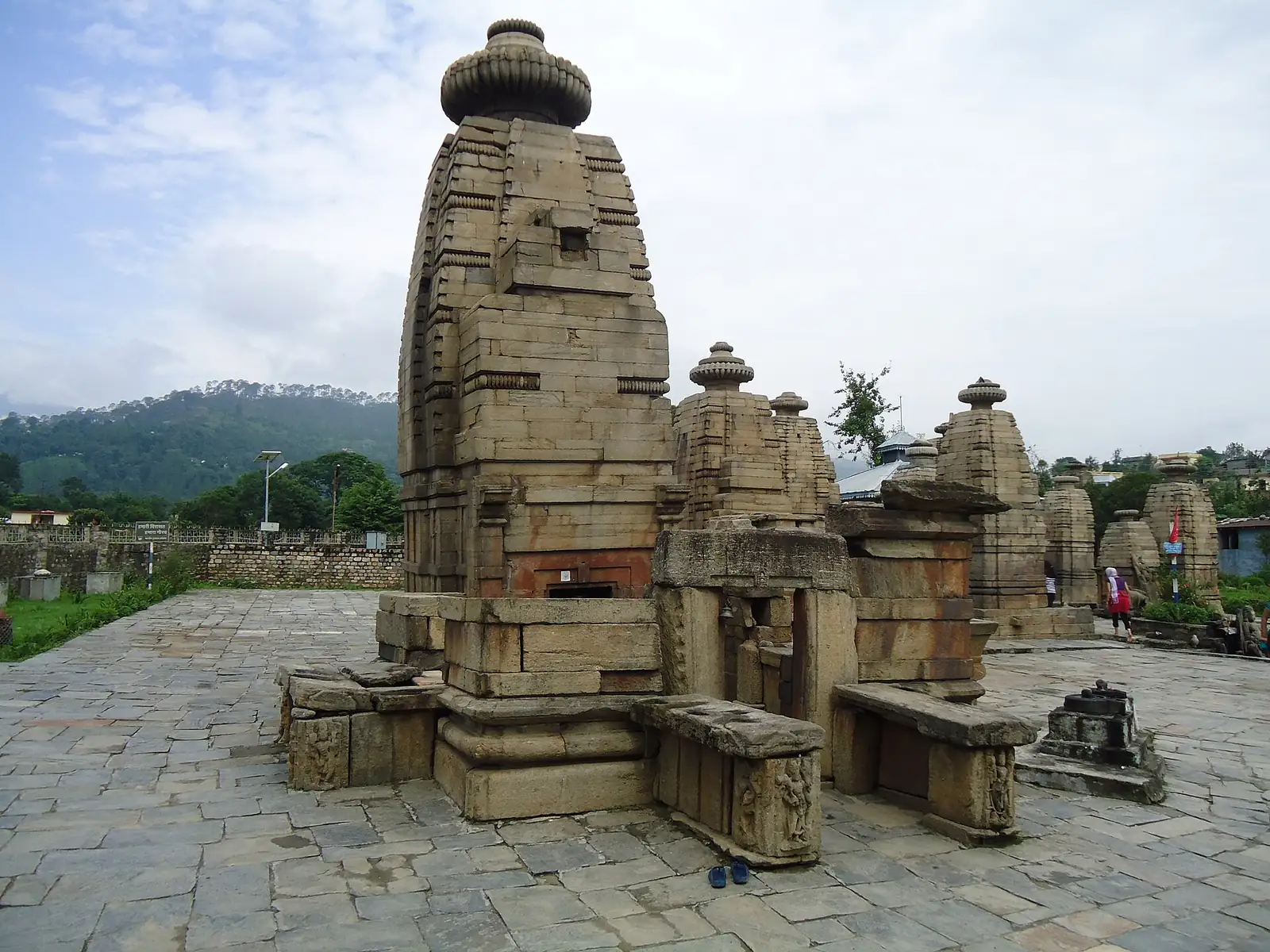
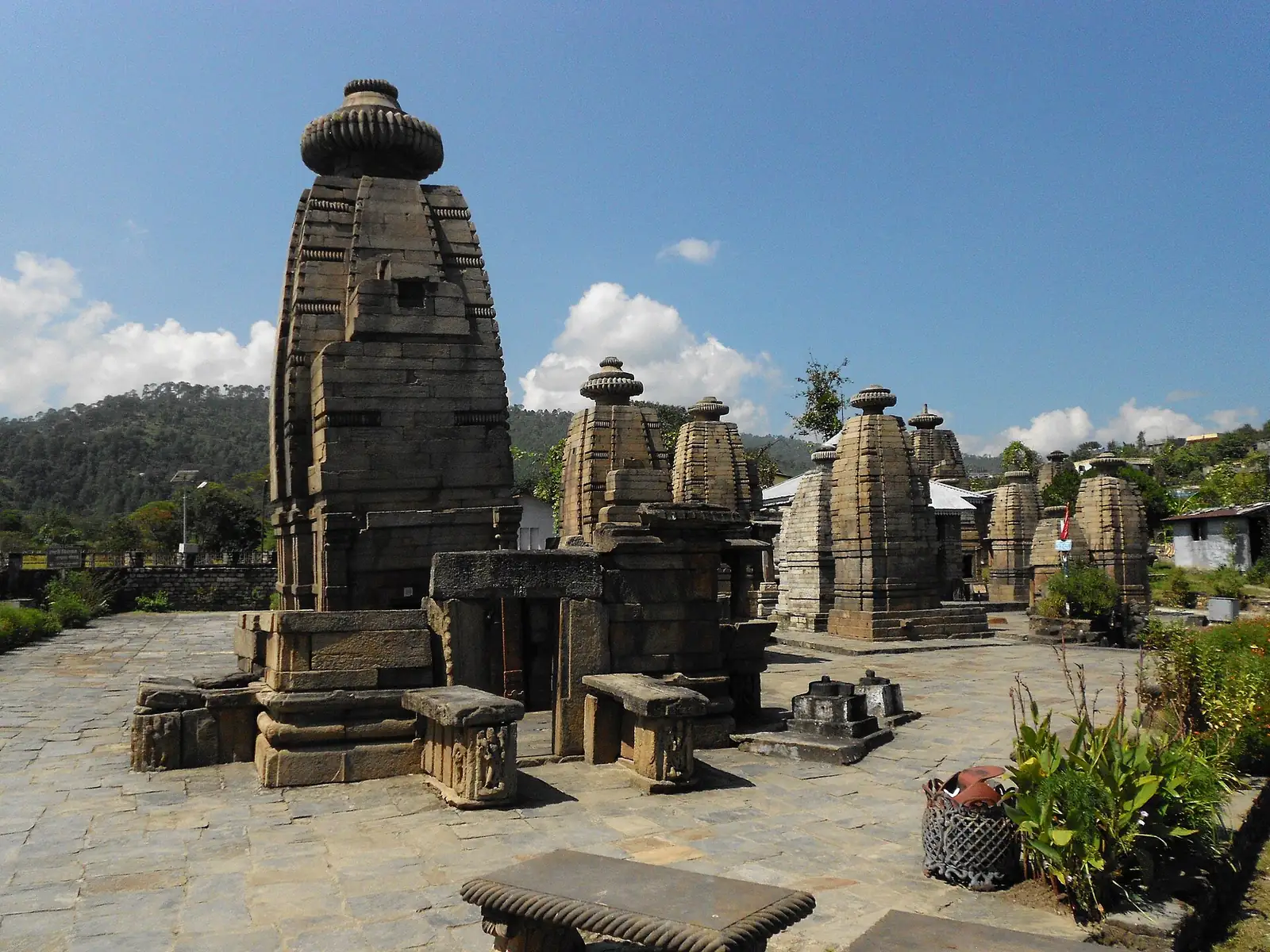
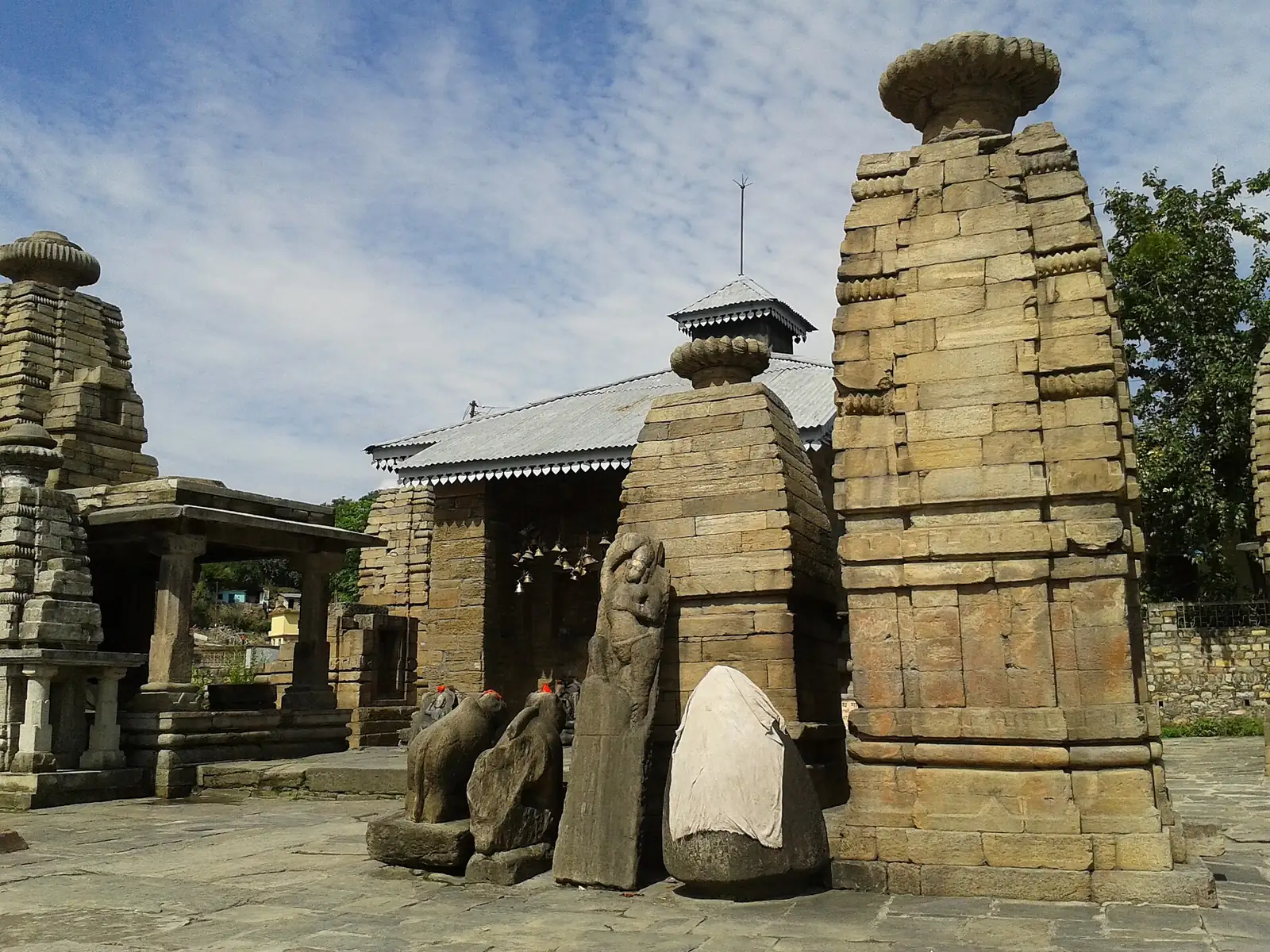
Eighteen stone temples stand on the left bank of the Gomti river, built in the Nagara style by the Katyuri kings when this was their capital, Kartikeyapura. The complex was completed in the 12th century, and inscriptions dated 1202 CE have been found here. The main temple is dedicated to Shiva as Vaidyanath — “lord of physicians”, a name that over time softened into Baijnath.
Look for the image of Parvati in grey schist inside the main shrine; temples that show the goddess alongside Shiva in this way are unusual. The site holds more than a hundred stone images in all, some still worshipped and others preserved by the Archaeological Survey of India. A flight of stone steps from the river, said to have been built on the orders of a Katyuri queen, leads up to the temples. Read our detailed Baijnath guide.
Kot Bhramari Devi Temple
Distance: about 2 km from Baijnath.
On a hill above the valley, on the site of an old Katyuri fort, stands the temple of Kot Bhramari Devi, where the goddesses Bhramari and Nanda Devi are worshipped. Tradition holds that they were the clan deities of the Katyuri kings. By local custom the devotees worship the goddess from behind, and only the priest sees her face — except on special occasions such as Nandashtami. The temple’s big fair falls during Chaitra Navratri in spring.
Please follow the priest’s guidance on photography here; it is very much a living shrine.
Bagnath Temple, Bageshwar
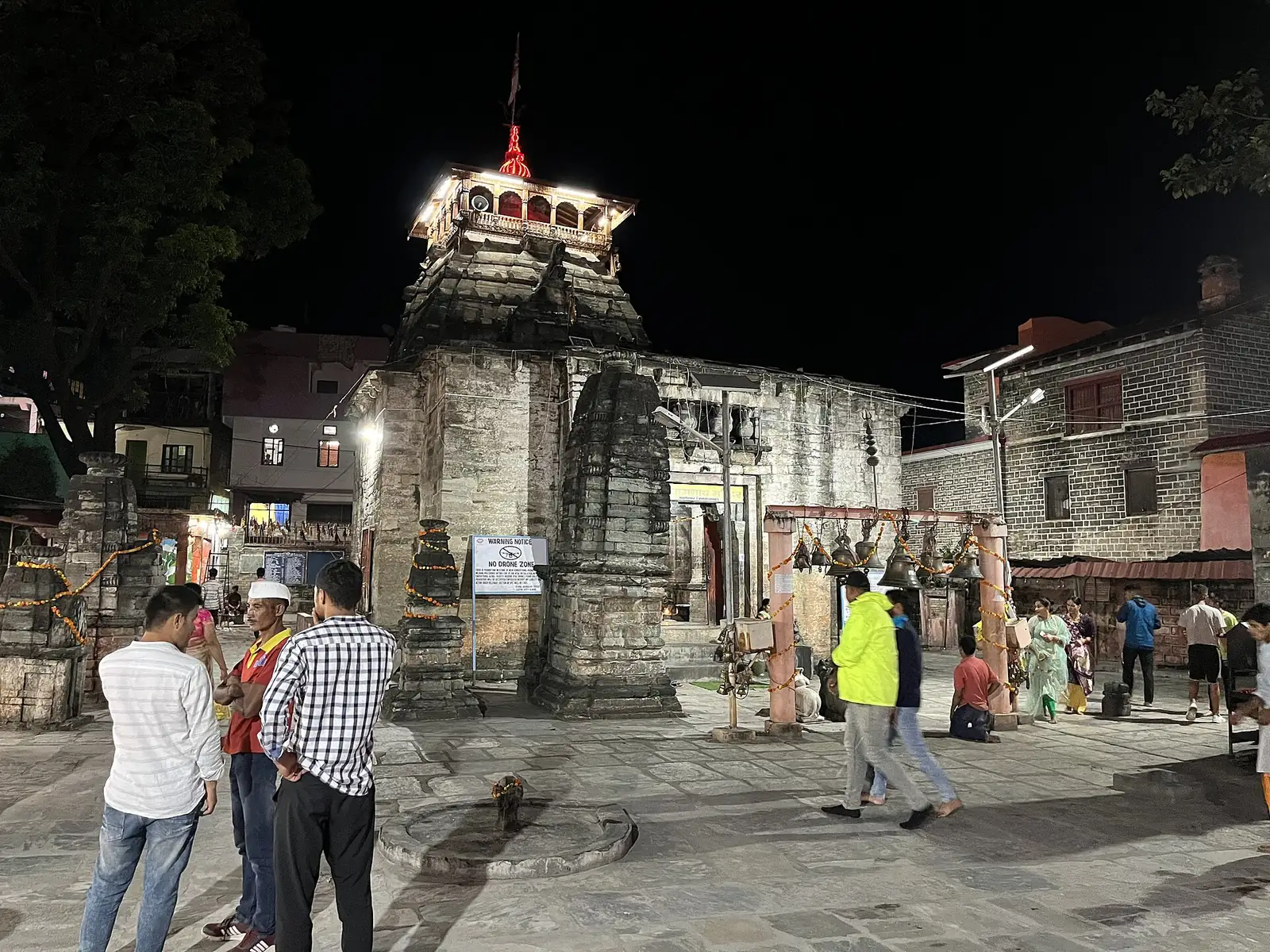
Distance: about 40 km from Kausani, via Baijnath and Garur.
Bageshwar takes its name from this temple of Shiva, which stands where the Saryu and Gomti rivers meet. Legend says the sage Markandeya worshipped here and that Shiva appeared to him in the form of a tiger — bagh — hence Bagnath. The present building is credited to the Chand king Laxmi Chand (sources disagree on the exact date), though the site itself is far older: statues inside range from the 7th to the 16th centuries.
The temple is hung with bells of every size. Visit in mid-January and you will find the Uttarayani fair in full swing on Makar Sankranti, when pilgrims bathe at the confluence before dawn.
Rudradhari Falls and Caves
Distance: roughly 10–12 km from Kausani on the Almora road, then a walk of about 2 km from Kantali village.
This one is as much a nature walk as a pilgrimage. The trail climbs through pine forest and terraced fields to a waterfall and a set of natural caves. The name combines Rudra and Hari — Shiva and Vishnu — and a small shrine near the falls honours both.
A suggested temple day
- Morning: leave after breakfast and drive down to Baijnath (allow an hour or more on site).
- Late morning: continue up to Kot Bhramari for the valley view.
- Afternoon: lunch in Bageshwar, then the Bagnath temple and the riverside ghats.
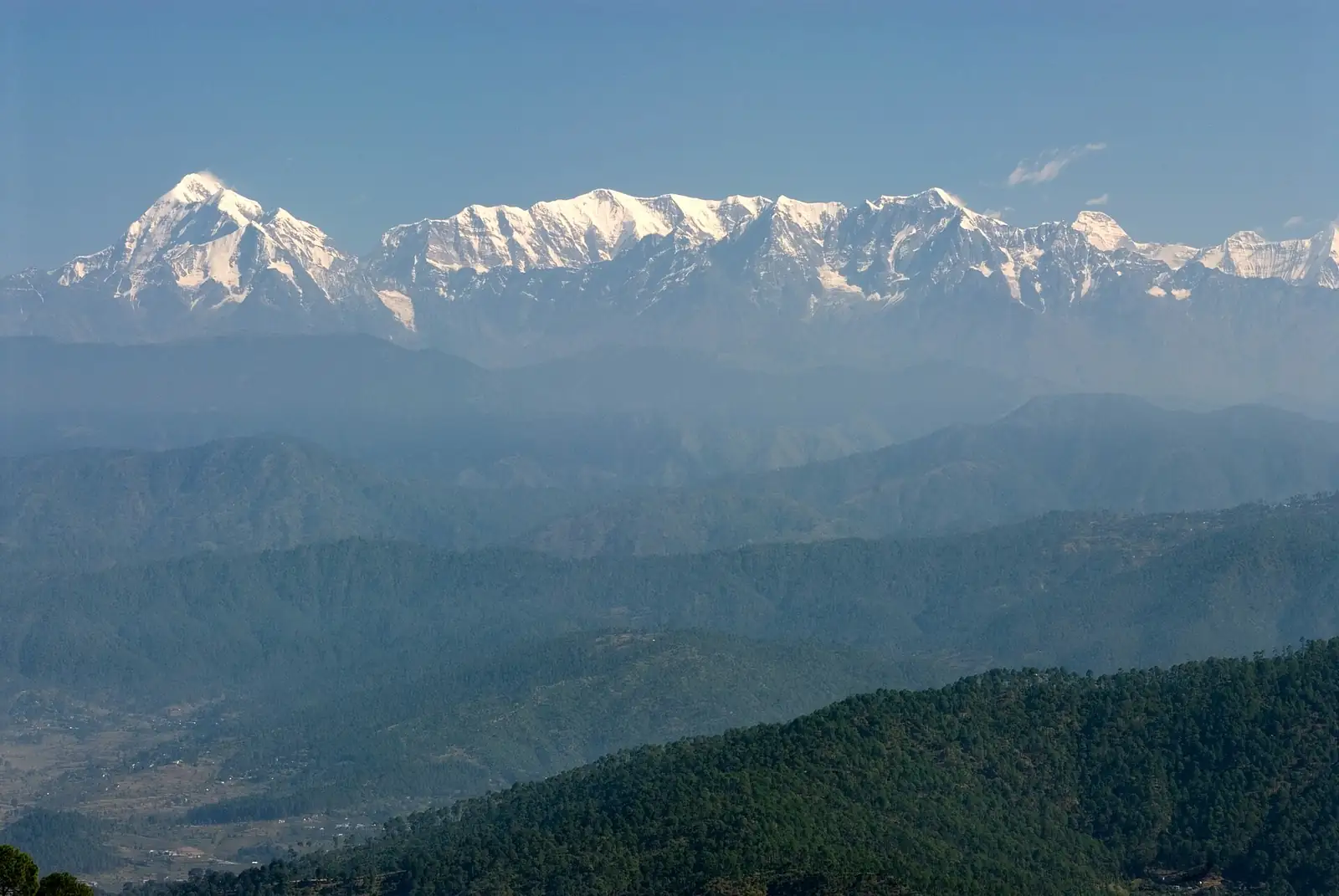
- Evening: back up the hill in time for sunset over the peaks.
Temple etiquette
- Dress modestly and remove shoes where asked.
- Ask before photographing inside any shrine.
- Carry small change for offerings and for the local sweet-sellers outside.
- Avoid leather inside temple premises where it is discouraged.
Lap of Himalayas sits on the Kausani–Garur road, so you are already part-way to Baijnath when you set out. Ask our team to arrange a cab for the day.