Baijnath: The 800-Year-Old Stone Temples of the Garur Valley
Eighteen stone temples, a capital of kings and a rare image of Parvati. Everything you need to know before visiting Baijnath, 16 km from Kausani.
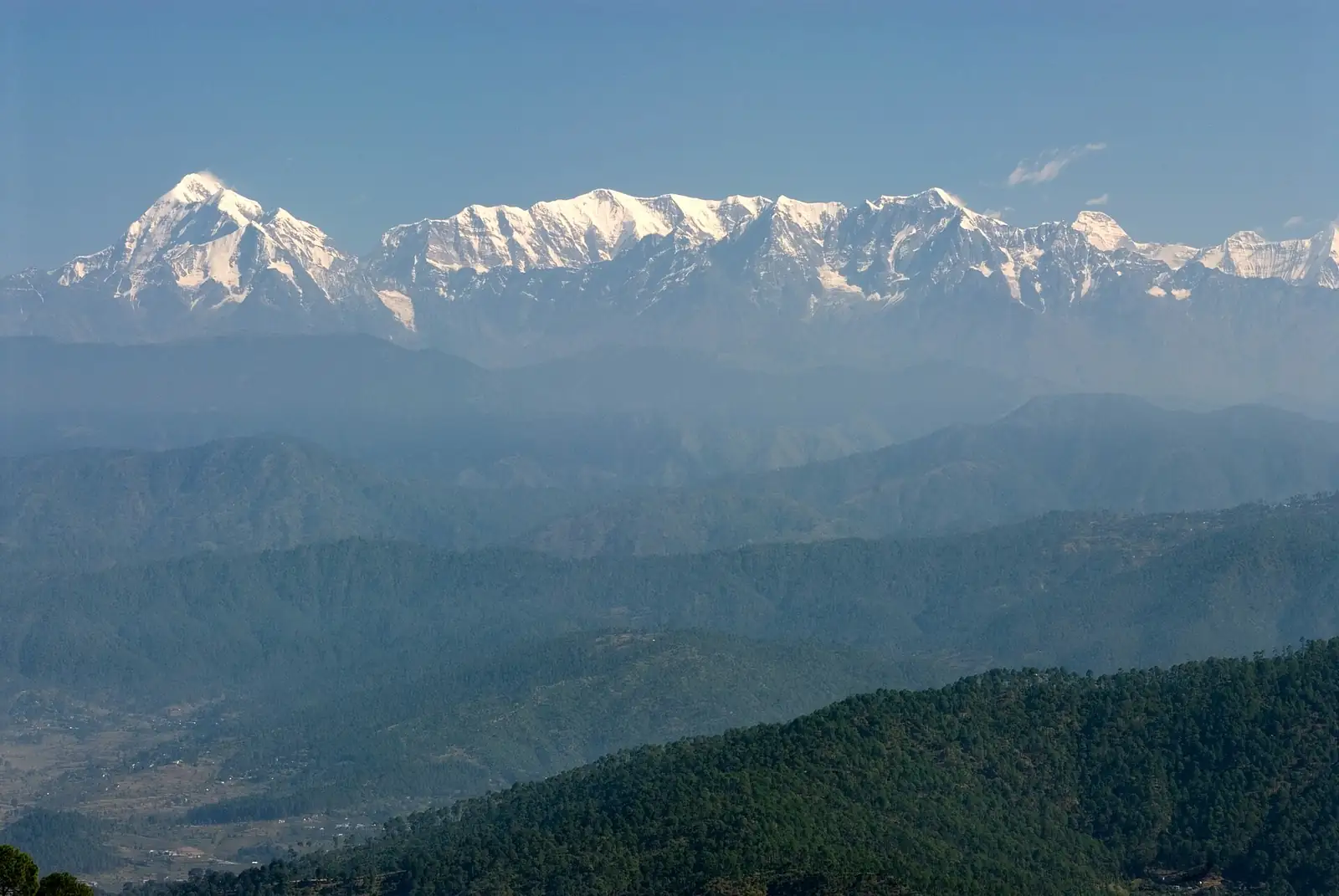
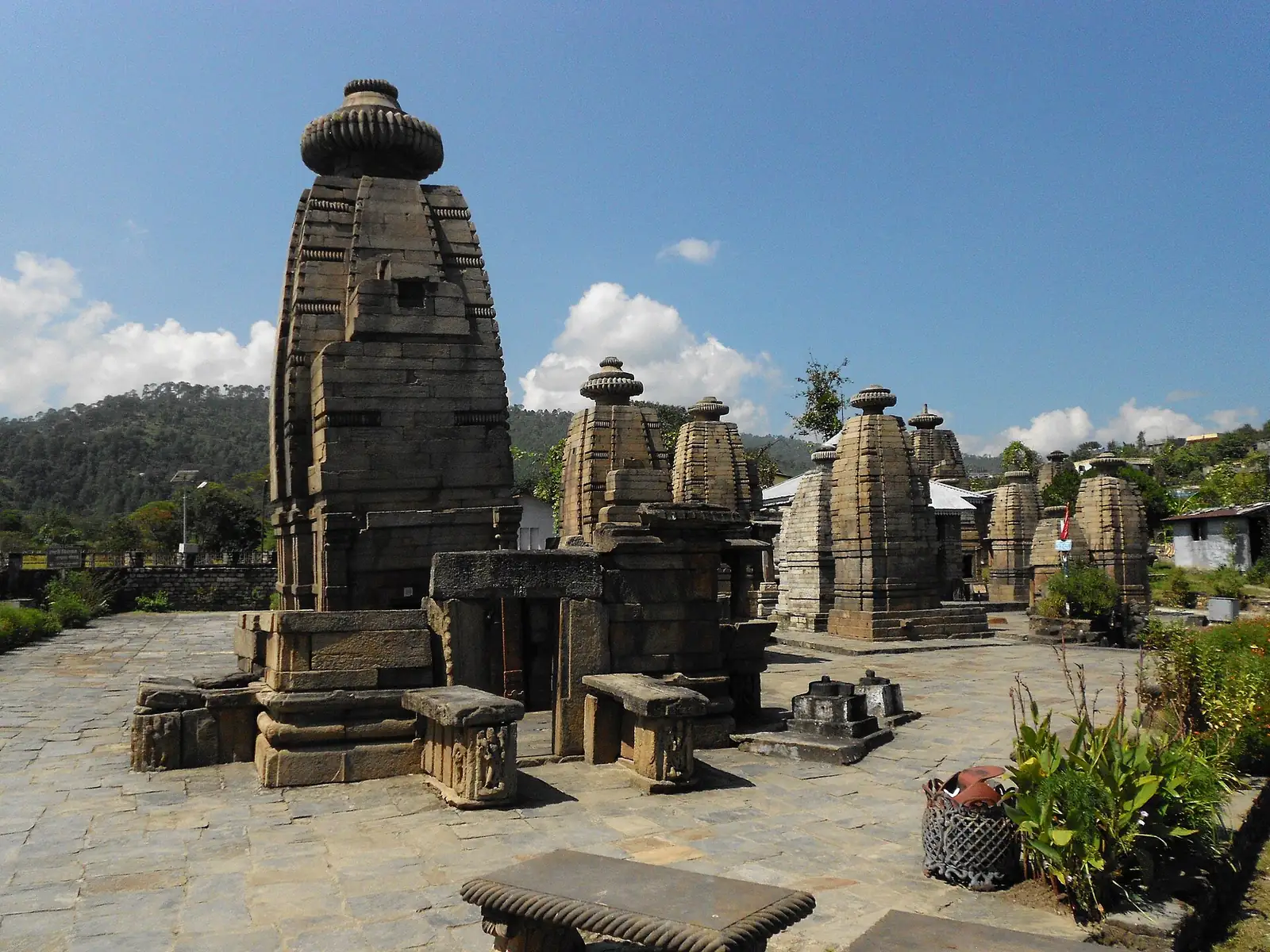
Drive down from Kausani into the Garur valley and the hills open out into a broad, green basin. Beside the Gomti river, among old trees, stands a cluster of dark stone towers that has watched over this valley for around eight hundred years. This is Baijnath — and for anyone interested in the history of the Himalaya, it is the single most important site near Kausani.
A royal city
Baijnath was once Kartikeyapura, the capital of the Katyuri kings, the first great dynasty of Kumaon. The Katyuris had earlier ruled from Joshimath in the Alaknanda valley; they moved their seat here, and the temples rose beside the new capital — in part, it is said, to house the Shaiva ascetics who followed the court.
The complex was completed in the 12th century CE. Inscriptions dated 1202 CE have been found on site, which makes Baijnath one of the better-dated medieval temple groups in the region.
What you will see
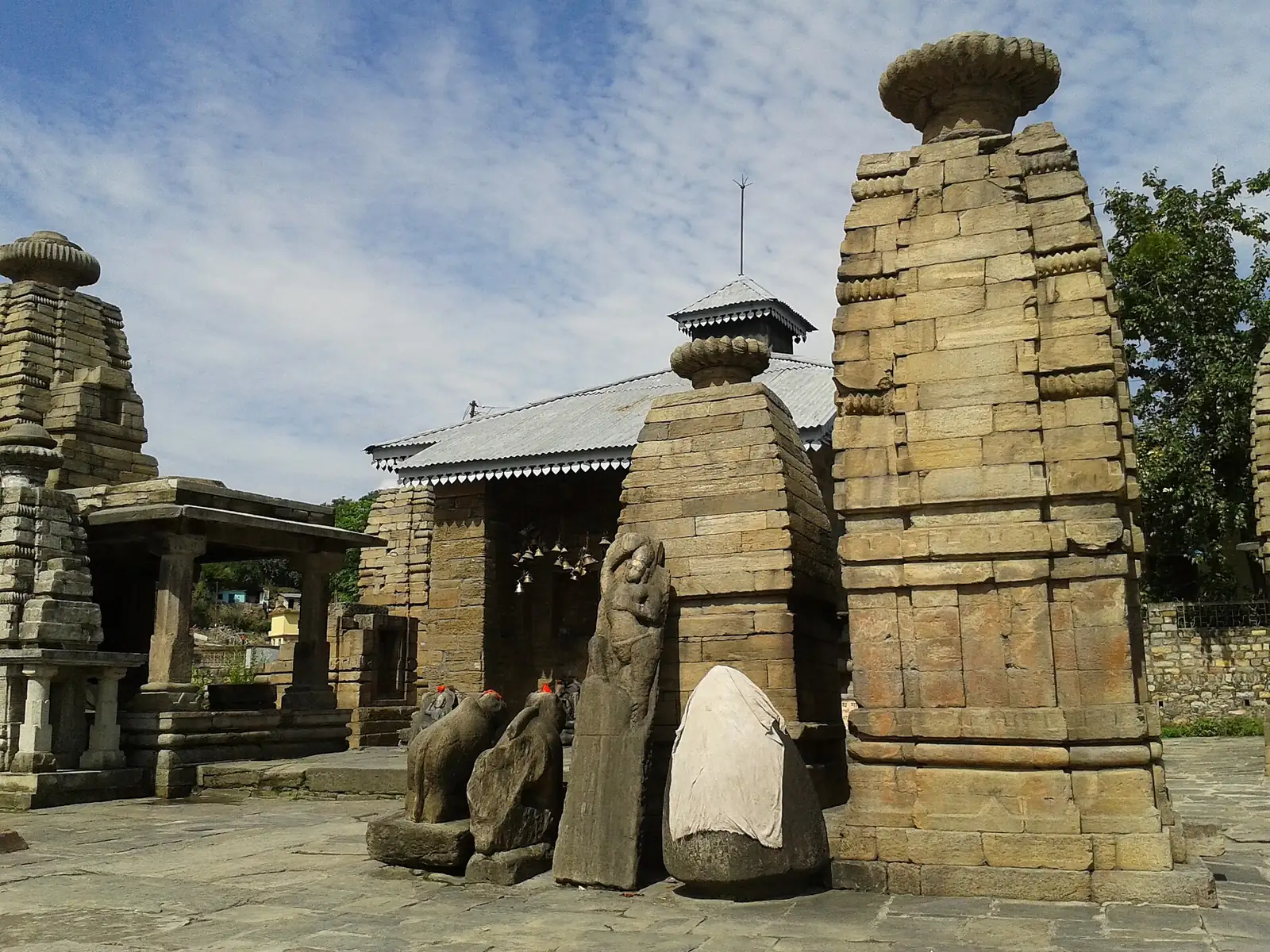
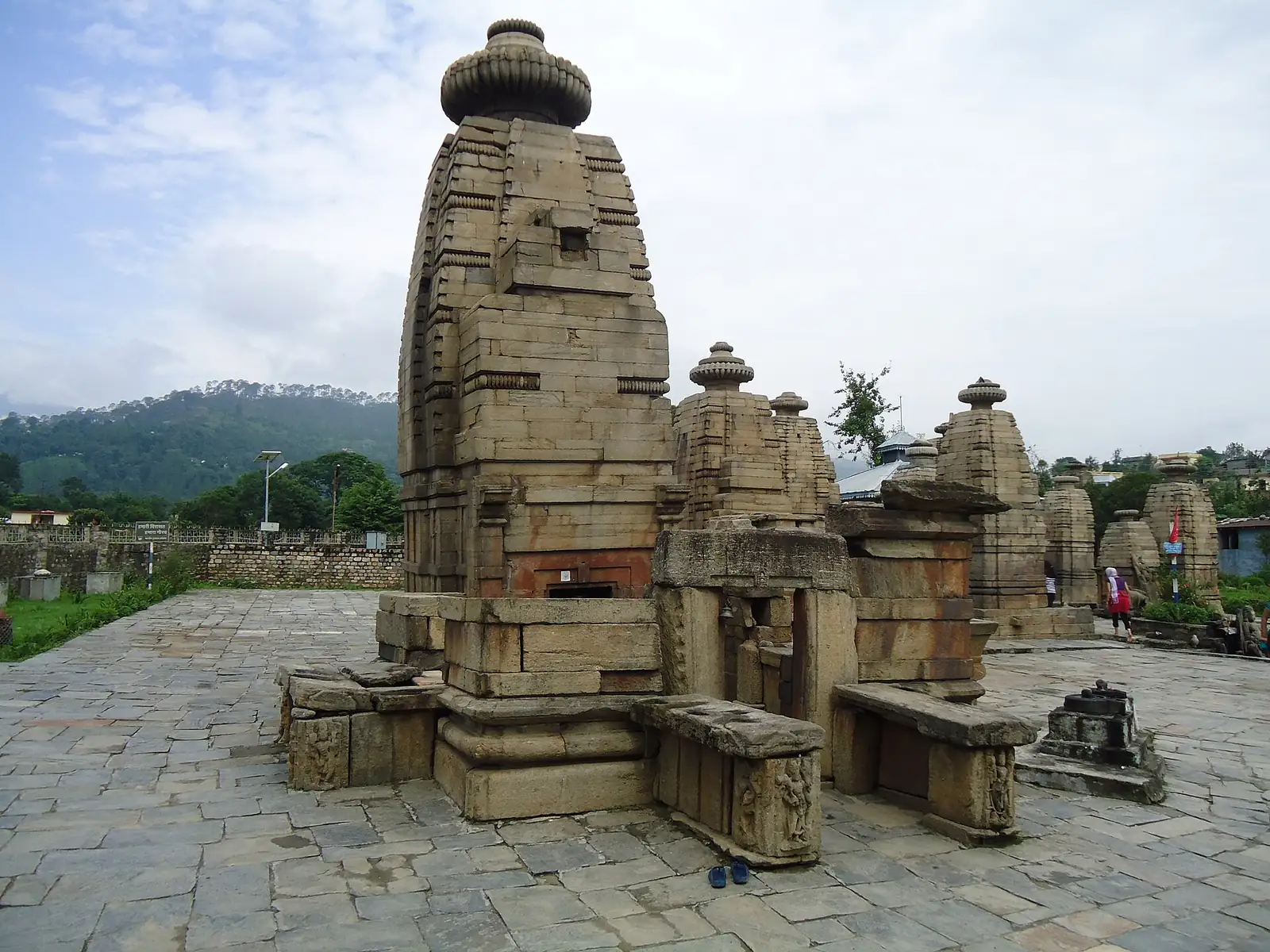
The complex is a cluster of eighteen stone temples built in the Nagara style, with the tall, curved towers (shikharas) typical of north Indian temple architecture. The principal shrine is dedicated to Shiva as Vaidyanath, “lord of physicians” — a name that, over centuries of local speech, became Baijnath.
- The Parvati image. Inside the main temple is a carved image of Parvati in grey schist. Shrines that show the goddess alongside Shiva in this way are rare, and the carving is exquisite.
- More than a hundred sculptures. The site holds 102 stone images. Some are still in worship; others are preserved by the Archaeological Survey of India. Among the deities represented are Ganesha, Kartikeya, Narasimha, Brahma, Mahishasuramardini, Surya, Garuda and Kubera.
- The queen’s steps. A flight of stone steps leads up from the river to the temples. Tradition says it was built on the orders of a Katyuri queen.
Ruin and restoration
Baijnath has not survived untouched. The temples were restored and rebuilt under King Gyan Chand of the Chand dynasty, which succeeded the Katyuris in Kumaon. In 1743–44, Rohilla raiders plundered the complex and destroyed the spire of the main shrine. What you see today is a site that has been damaged, repaired and cared for across many centuries — which only adds to its quiet power.
Festivals
Pilgrims gather here in large numbers for Mahashivratri and Makar Sankranti. If your visit coincides with either, expect crowds, music and a very different atmosphere from the calm of an ordinary morning.
Practical tips
- Getting there: Baijnath is about 16 km from Kausani on the Bageshwar road. Lap of Himalayas lies on this same road, so you are already part of the way there.
- Time needed: one to two hours, longer if you like to sit by the river.
- Best light: early morning or late afternoon, when the stone glows and the crowds are thin.
- Combine with: Kot Bhramari temple, about 2 km away on a hilltop above the valley.
- Respect: dress modestly, remove shoes where asked, and check before photographing inside the shrine.
Want to go? Our front desk will happily arrange a cab and suggest the best time to leave. See our full guide to temples near Kausani.