Reading the Skyline: The Himalayan Peaks You Can See from Kausani
Trishul, Nanda Devi, Panchachuli, Nanda Kot and more — how to name the snow peaks on Kausani’s horizon, and when you are most likely to see them clearly.
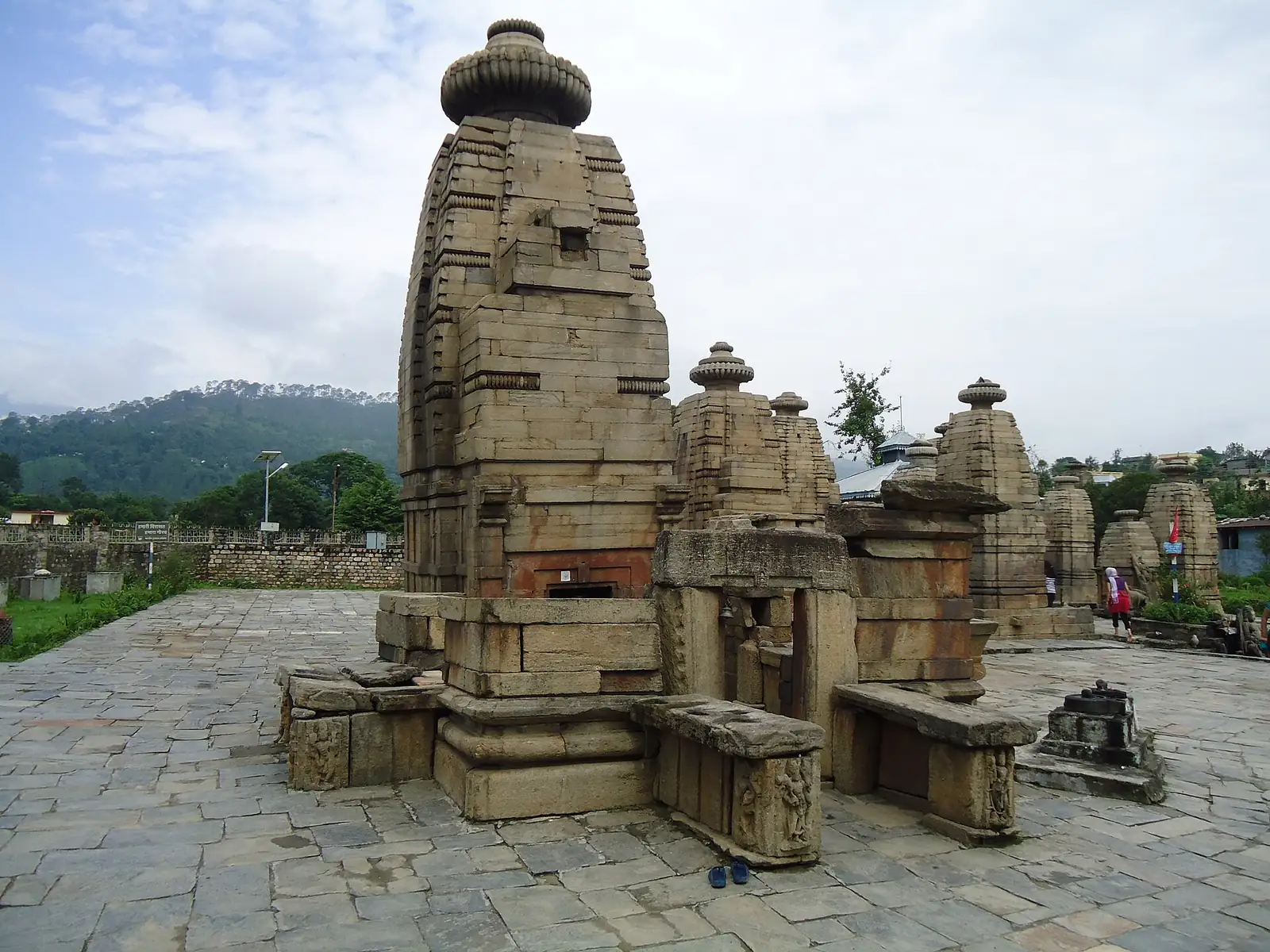
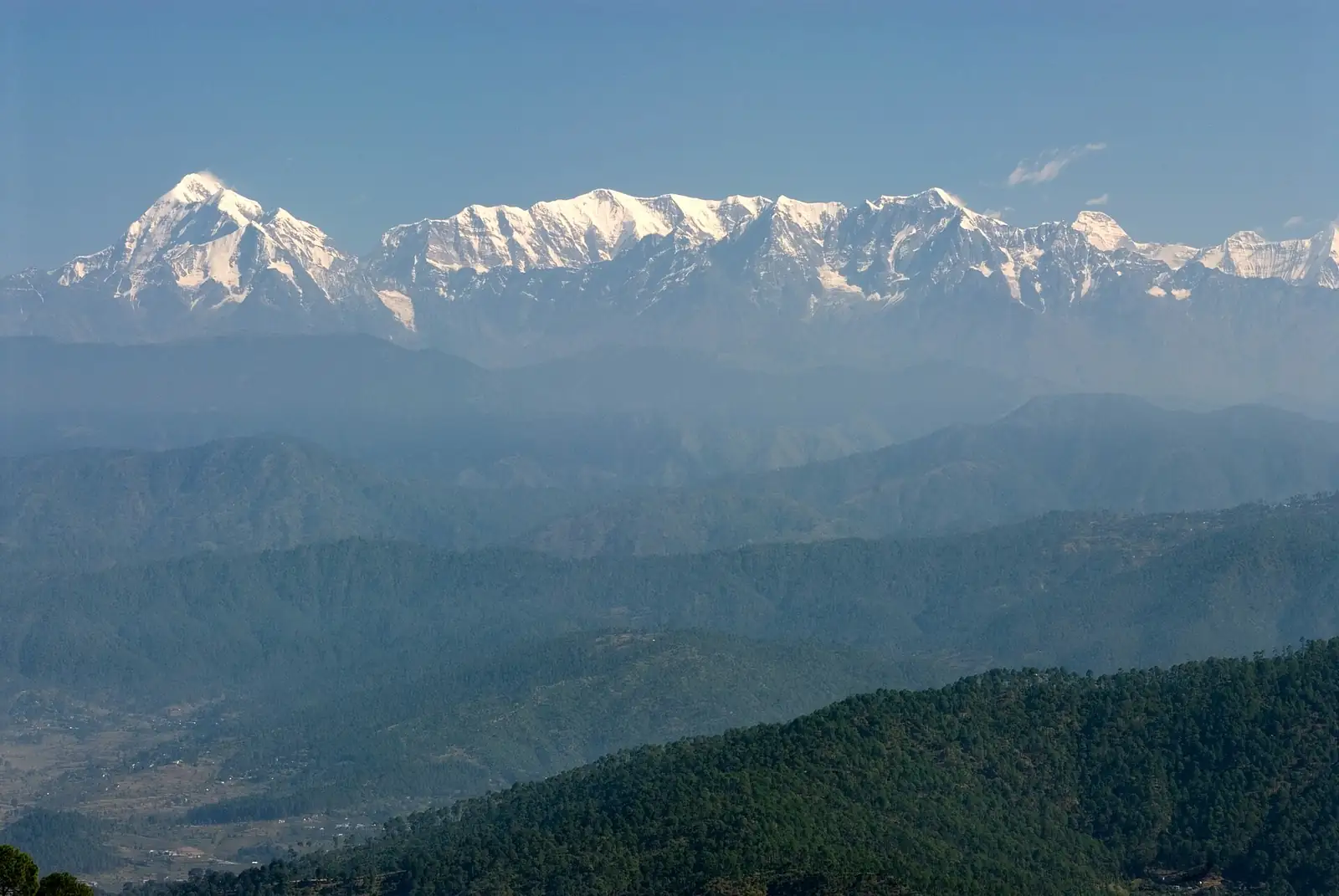
Kausani’s fame rests on a single view. From the ridge, a wall of snow peaks stretches across the northern horizon — a panorama often described as some 300 km wide. Most visitors simply gasp. This guide is for those who also want to know what they are looking at.
The peaks, west to east
Exactly which summits you can pick out depends on where you stand and how clear the air is, but these are the names to know.
Chaukhamba — 7,138 m
Far to the west, on the clearest days, the four-pillared massif of Chaukhamba rises above the Gangotri group in Garhwal. Spotting it is a mark of a truly exceptional morning.
Nanda Ghunti — 6,309 m
A shapely peak on the western rim of the Nanda Devi Sanctuary, often seen just left of Trishul.
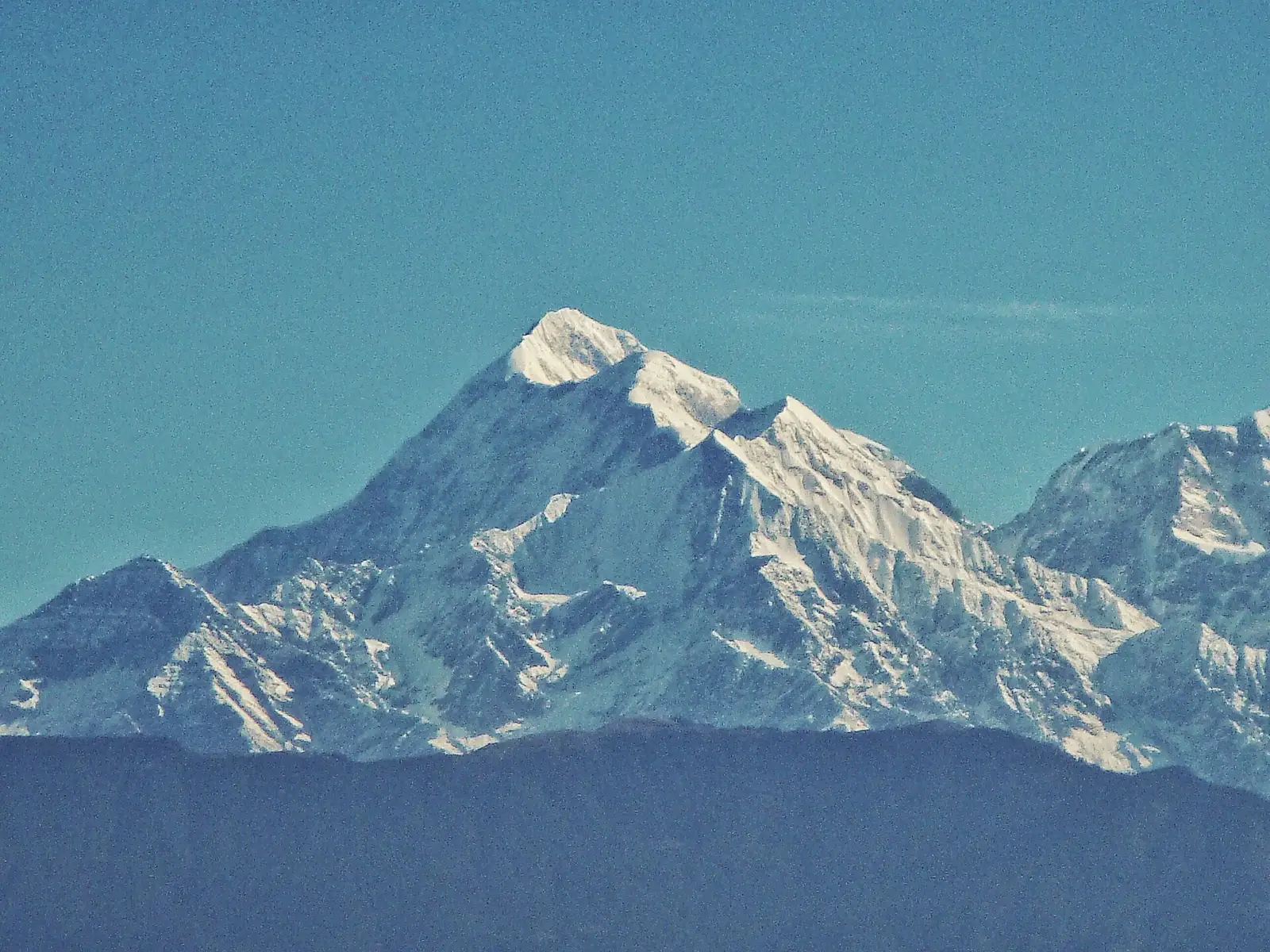
Trishul — about 7,120 m
The broad, three-summited “trident” of Shiva is the peak that dominates Kausani’s skyline. Trishul has a special place in mountaineering history: when Tom Longstaff’s party stood on top on 12 June 1907, it became the first peak over 7,000 metres ever climbed.
Nanda Devi — 7,816 m
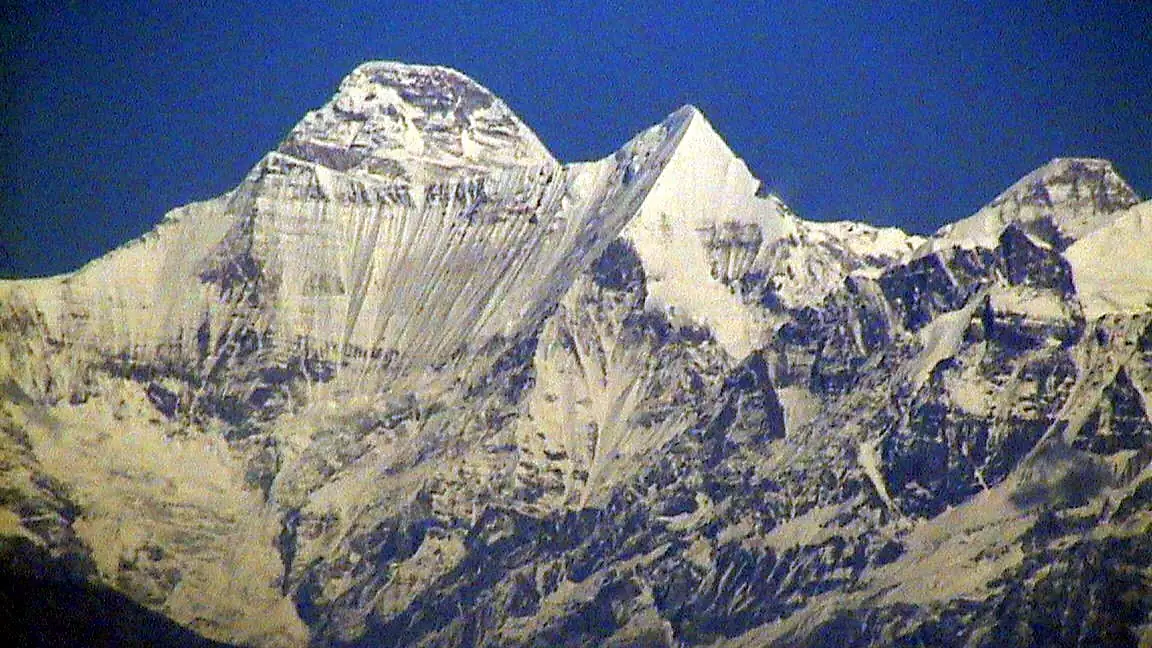
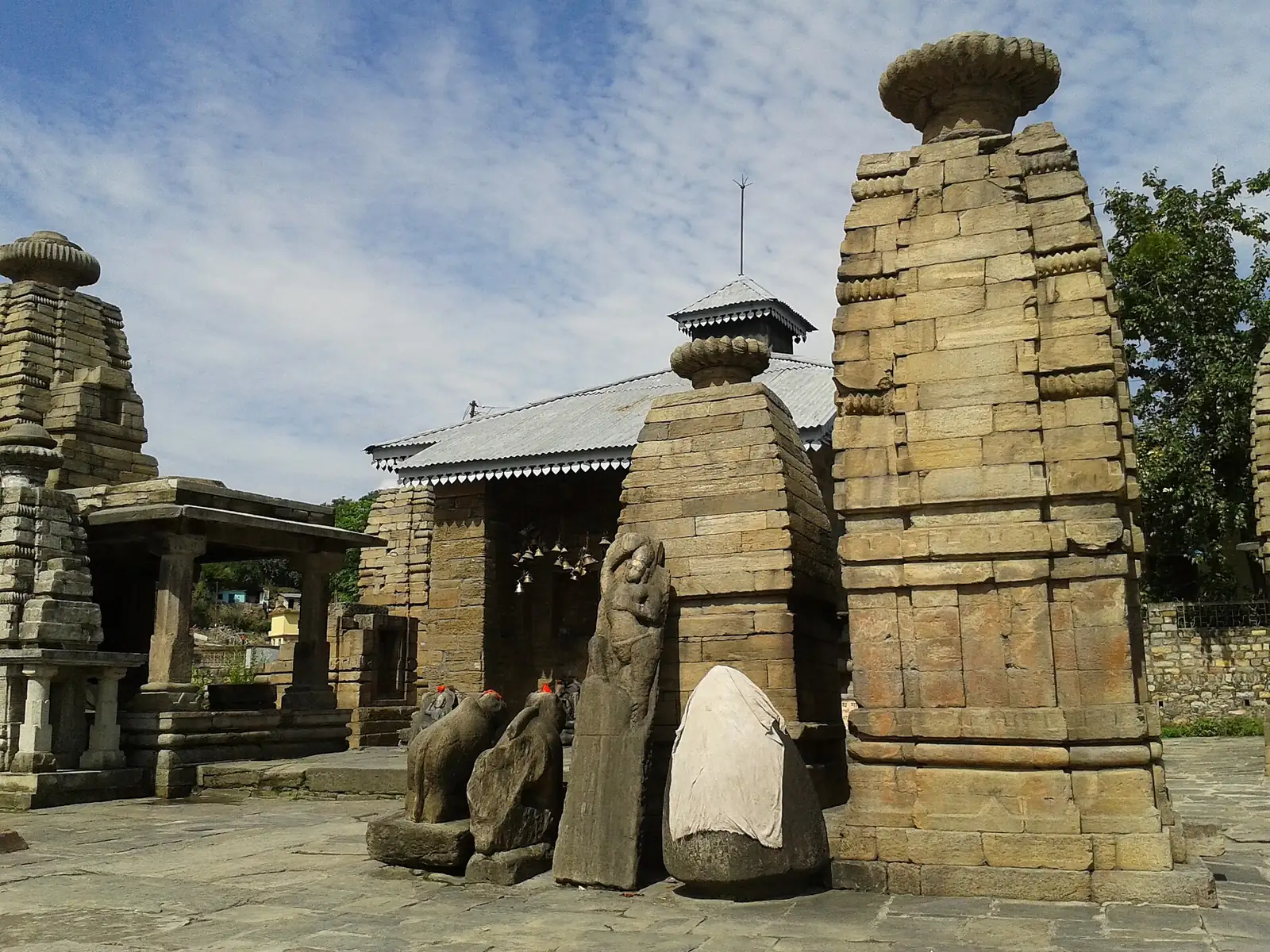
Behind and to the right of Trishul rises the twin-summited Nanda Devi, the second-highest mountain in India and the highest lying entirely within the country. Locally she is revered as the patron goddess of Kumaon and Garhwal — the same goddess worshipped at Kot Bhramari in the valley below.
Nanda Kot — 6,861 m
East of Nanda Devi, look for the smooth, snowy dome of Nanda Kot, whose name means “Nanda’s fortress”.
Panchachuli — up to 6,904 m
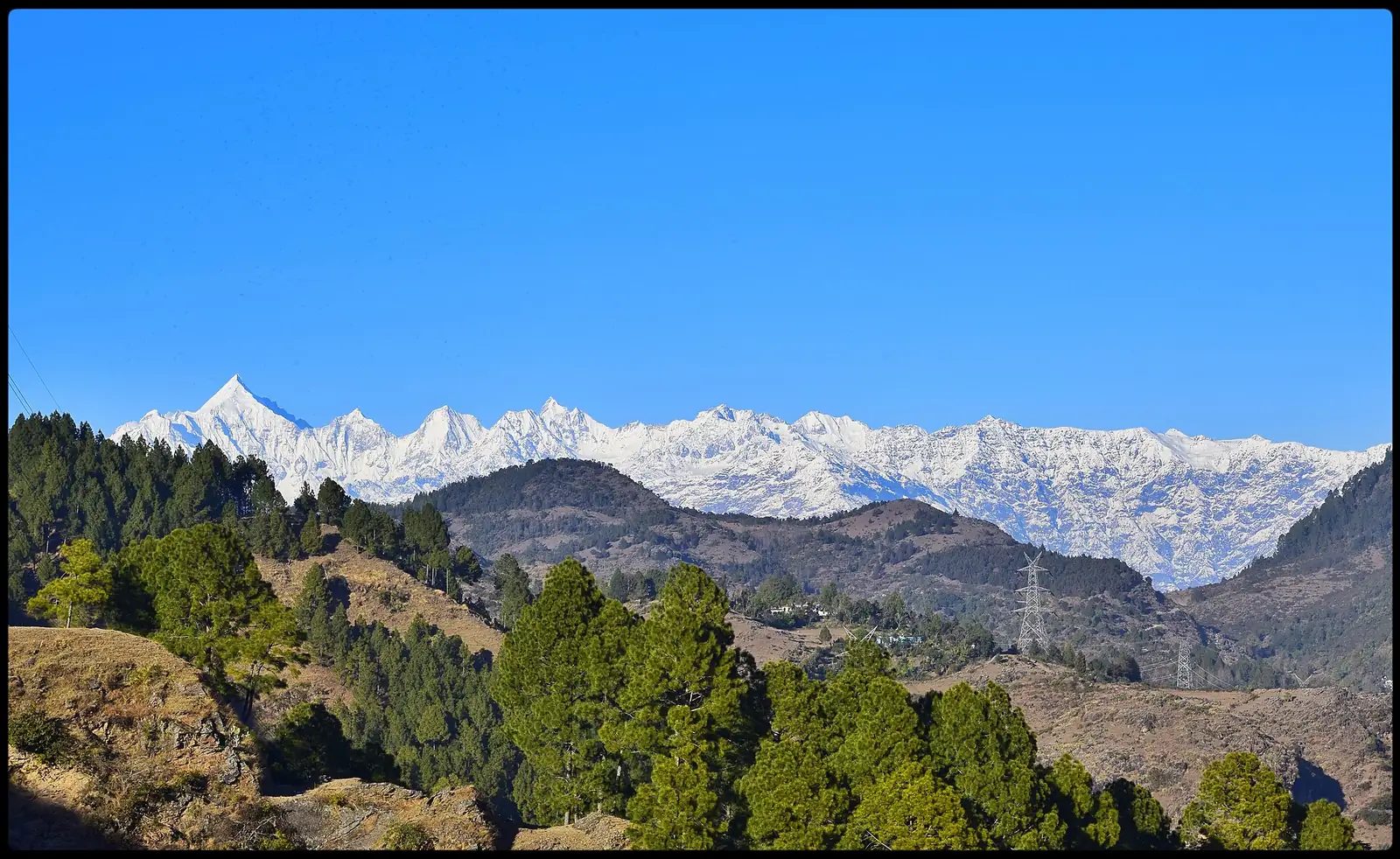
Far to the east, near the border with Nepal, the five summits of Panchachuli — the “five hearths” — catch the light. Legend says the Pandavas cooked their last meal here before setting out for heaven.
When will I see them?
The mountains are always there; the question is whether the clouds will let you see them.
- October to December — the best season. The monsoon has washed the air clean, and crisp, cloudless mornings are common.
- January to March — often very clear, sometimes with snow in Kausani itself. Cold, but spectacular.
- April to June — warm days and good mornings, though haze can build up in the afternoon.
- July to September — monsoon. The peaks hide behind cloud for days at a time, then reveal themselves suddenly and gloriously after rain.
How to catch the alpenglow
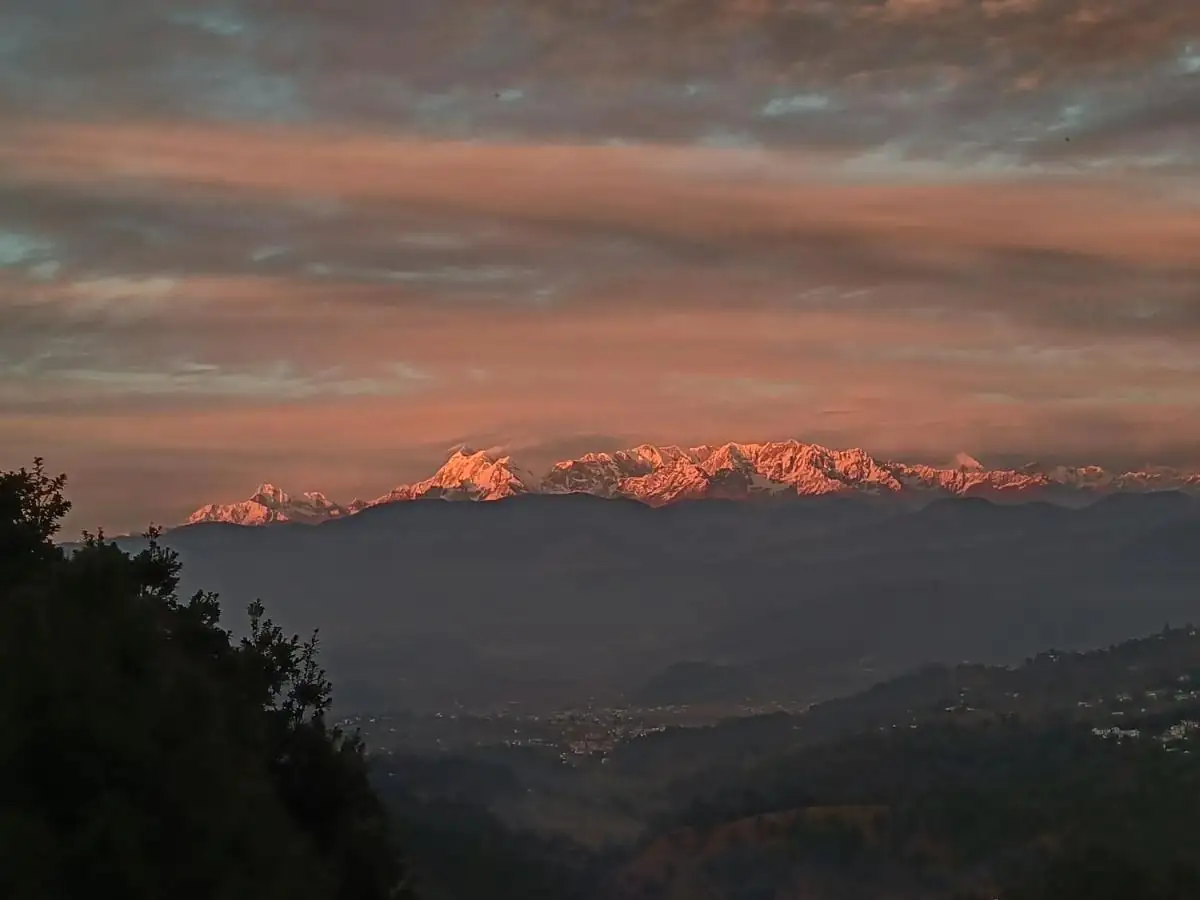
- Check the sunrise time the night before and set an alarm 20–30 minutes earlier.
- Look north. The highest summits catch the light first: pink, then gold, then white.
- Have your tea ready — the show lasts barely ten minutes.
- Photographers: expose for the bright snow and let the valleys fall into shadow.
At Lap of Himalayas, every room faces the range, so you can watch it all without leaving your balcony. See our rooms.